The Celtic Cross is a classic ten-card tarot spread that maps complex life decisions, hidden motives, and likely paths forward.
When a simple three-card reading feels too brief for a major turning point, the Celtic Cross offers a complete, layered view of your situation. In Tarot Mystic, this comprehensive spread opens with Premium. It arranges ten cards into two sections: a central cross of six cards (where the second card crosses the first) and a vertical staff of four cards on the right, read from bottom to top.
What does each position mean?
- Situation: The heart of the matter right now.
- Obstacle: What crosses you as a challenge or opposing force—a complication to work through rather than doom.
- Conscious mind (crown): What you know and consciously aim for; your stated goal.
- Past: Events and influences just behind you that are now passing away.
- Subconscious (foundation): The hidden roots, instincts, and unspoken drivers beneath the surface.
- Near future: What arrives soon; the immediate next step.
- The querent (attitude to the situation): How you see yourself and how you are acting in this matter.
- Environment: Outer circumstances and the people around you who influence the situation.
- Hopes and fears: What is wished for and dreaded, which are often two sides of the same coin.
- Outcome: The likely resolution if the current course holds, showing where things head if nothing changes.
How to read it
The Celtic Cross is read as two interconnected stories: the central cross and the outer staff.
The central cross anchors the inquiry around the first card. You read the Situation directly against the Obstacle to understand the immediate tension. Then, the Situation is read against the other four surrounding cards: the Conscious mind above, the Past behind, the Subconscious below, and the Near future ahead. This cross shows where you stand between what is fading away and what lies directly in front of you.
The staff on the right examines the broader context. Position 7 (The querent) is read against Position 8 (Environment), contrasting your internal mindset with outer circumstances. Position 8 then connects to Position 9 (Hopes and fears), showing how external realities feed your expectations. Finally, Position 9 connects to Position 10 (Outcome), highlighting how what you hope for and dread steers where things ultimately head.
Pay attention to how the elements of neighbouring cards interact. When Air and Fire meet, ideas fan action and drive feeds planning. When Earth and Water meet, emotional insights find solid, practical form. Conversely, Fire and Water can clash, causing emotional reactions and drive to cancel each other out, while Air and Earth can show practical constraints stifling fresh concepts.
Take note of the overall card patterns across all ten positions. When a majority of Major Arcana appear, big life themes and significant turning points are at work beyond ordinary day-to-day routines. If mostly Minor Arcana appear, the matter is grounded in everyday practical choices within your direct control. When many cards appear reversed, energy is blocked, delayed, or turned inward, suggesting aspects of the situation that are still being processed under the surface.
What questions is it good for?
- “I feel at a crossroads in my professional life and want a full perspective on my next move.”
- “Our relationship feels complicated right now, and I want to understand what is happening beneath the surface.”
- “I am considering a major life transition and want to see the hidden challenges and real opportunities.”
- “Why do I feel blocked in my creative work, and what steps will help me move forward?”
- “How can I navigate this long-standing conflict with clarity and balance?”
A short example
Imagine someone asking: “How should I navigate this career transition?”
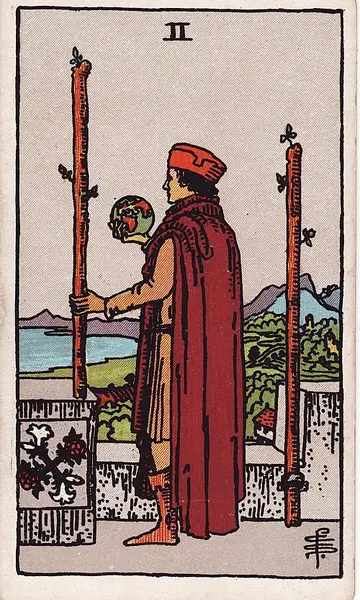
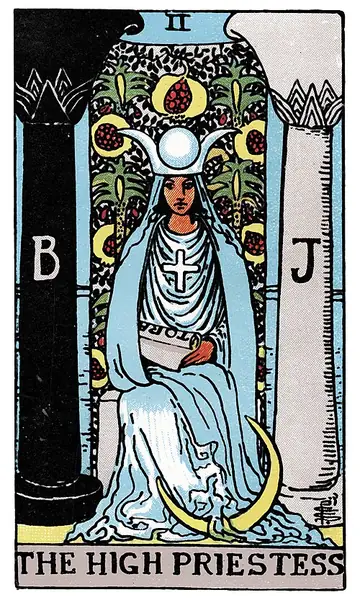
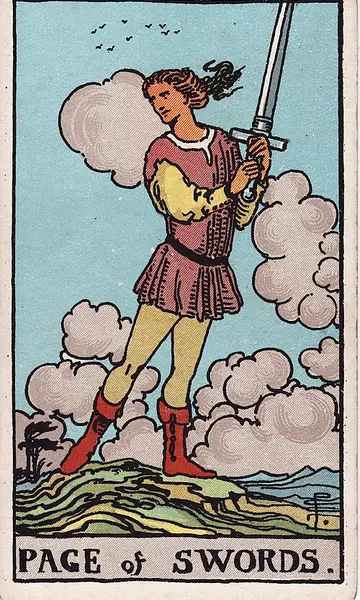
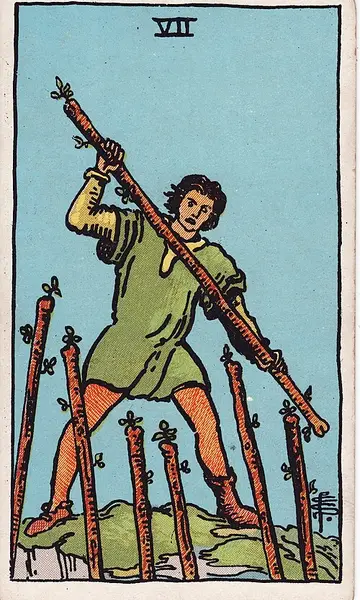
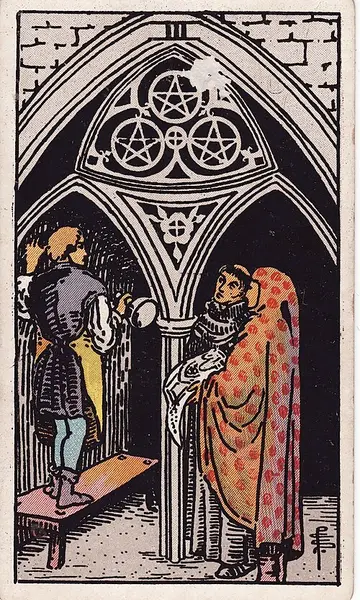
- Situation: Two of Wands. Standing between present success and wider horizons; planning and choosing a direction.
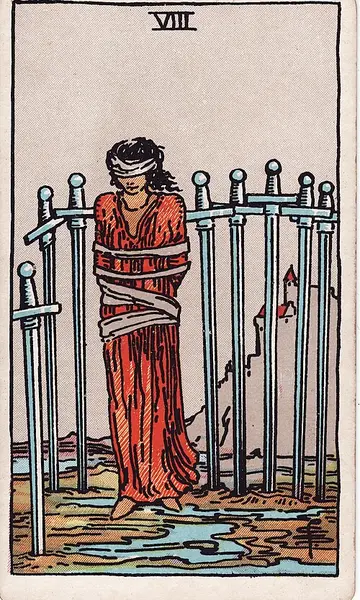
- Obstacle: Eight of Swords. Trapped by self-imposed limits; restriction and victim thinking.
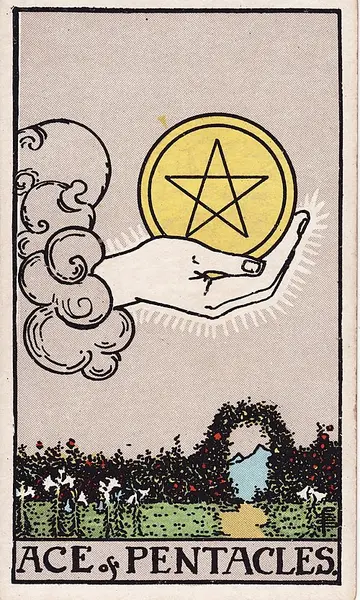
- Conscious mind (crown): Ace of Pentacles. A seed of tangible prosperity: a new financial or material opportunity.
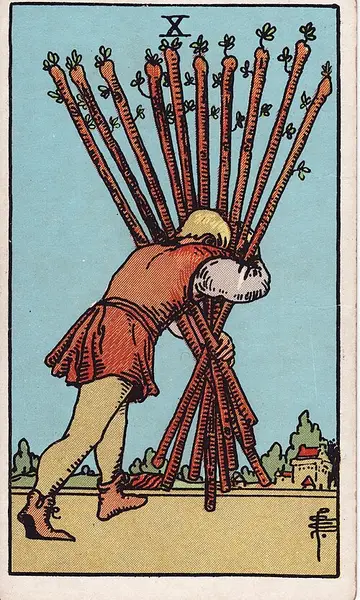
- Past: Ten of Wands. Carrying too much: the burden of responsibility close to the finish.
- Subconscious (foundation): The High Priestess. Hidden knowledge and an inner voice; wait, listen and trust intuition.
- Near future: Page of Swords. A curious, vigilant mind; messages, new ideas, truth-seeking.
- The querent (attitude): Seven of Wands (reversed). Overwhelmed, giving ground, or worn out by constant defence.
- Environment: Three of Pentacles. Skilled collaboration: craftsmanship, teamwork and recognised quality.
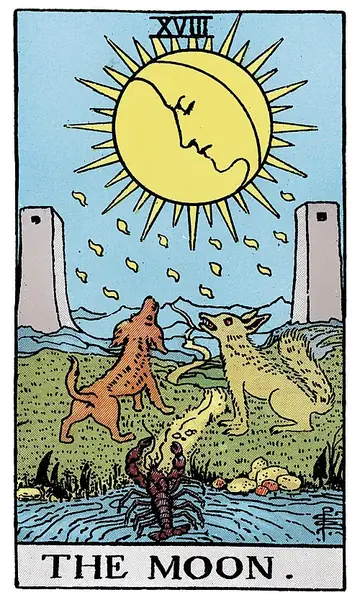
- Hopes and fears: The Moon. Illusion, fear and the unconscious; nothing is quite as it seems.
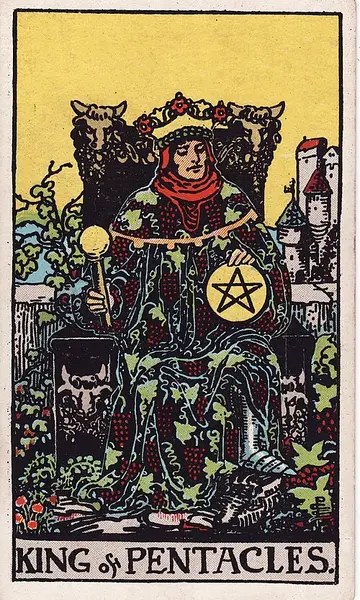
- Outcome: King of Pentacles. Mastery of the material: success, security and generous leadership.
Reading the central cross reveals a clear dynamic. The Two of Wands shows the querent actively planning their next horizon, but the crossing Eight of Swords reveals that self-imposed doubts and perceived limitations are holding them back. In the conscious mind sits the Ace of Pentacles—a practical desire for new financial stability—while the past shows the Ten of Wands, indicating they are still recovering from carrying too heavy a burden. Beneath it all, The High Priestess shows that their intuitive instincts already know what needs to happen. In the near future, the Page of Swords brings fresh information and curious inquiry.
Turning to the vertical staff, the querent’s reversed Seven of Wands reveals exhaustion from trying to defend their ground alone. Yet the surrounding environment in the Three of Pentacles is genuinely supportive, offering skilled teamwork and collaboration if they choose to accept it. The Moon in hopes and fears highlights an underlying worry about stepping into the unknown where things feel unclear. Finally, the King of Pentacles shows the outcome if they persevere: grounding their plans in solid, practical mastery and material stability.
Read as one narrative, the cards suggest that the real barrier is not the transition itself, but the lingering exhaustion from past overwork and self-limiting beliefs. By letting go of defensive isolation and embracing collaborative support, they can step out of the fog and build lasting security.