The Cross tarot spread uses five cards to uncover the heart of an issue, what brought you here, where things are heading, and what sits in your conscious and subconscious mind.
While the Three Cards spread is free for three questions a day in Tarot Mystic, the Cross opens with Premium. It is an ideal layout when a quick glance is not enough and you want to look at a complex dilemma from both the inside and the outside.
What does each position mean?
The Cross arranges five cards in a balanced shape: card 1 sits on the left, card 2 on the right, card 3 at the top, card 4 at the bottom, and card 5 rests right in the center.
- Past: What lies behind the situation. This card reveals the foundation, past events, or old momentum that shaped the present circumstance.
- Future: What is coming. This is the likely trajectory of where things head if nothing changes.
- Above (conscious mind): Conscious thoughts, goals, and what is openly wanted. This card represents your deliberate plans, logic, and what you openly acknowledge.
- Below (subconscious): Hidden motives and feelings beneath the surface. It captures gut feelings, underlying desires, and fears that you might not be fully acknowledging.
- Essence of the situation (center): The core the other four revolve around. This central card represents the defining tension, primary theme, or central question at the heart of your inquiry.
How to read it
Reading the Cross works best when you view it as two intersecting axes anchored by a central focal point.
The horizontal axis—composed of the Past (1), the Essence (5), and the Future (2)—shows movement through time. It explains how you arrived at this point and where the current momentum is naturally carrying you. The vertical axis—composed of Above (3), the Essence (5), and Below (4)—reveals your internal alignment. It highlights the dynamic between your deliberate rational mind and your deeper emotional truths.
Every outer card connects directly back to the center:
- Past and Essence: Look at how past choices or circumstances created the present reality.
- Future and Essence: Notice how resolving or navigating the core issue reshapes where you are heading.
- Above and Essence: See how your conscious perspective frames or misinterprets the real situation.
- Below and Essence: Discover the emotional undercurrent or hidden fear feeding the central theme.
Elemental interactions between neighboring cards deepen the narrative. When friendly elements meet—such as Air and Fire, where thoughts fan action, or Earth and Water, where feeling gains form and practical grounding—the situation moves with natural flow. When contrary pairs sit together, they highlight friction. Fire and Water can create emotional steam where passion and sensitivity cancel each other out, while Air and Earth can show high-minded theories struggling against stubborn practical realities.
Take note of overarching deck patterns as well. If a majority of the cards are Major Arcana, big life themes and turning points are at work, meaning this situation reaches beyond day-to-day routines. If no Major Arcana appear, the matter is grounded in everyday concerns and rests largely in your own hands. When many cards are reversed, energy may be delayed, turned inward, or blocked; when all cards stand upright, energy is flowing outward and openly.
What questions is it good for?
The Cross is versatile and suits any question where you feel caught between external developments and internal conflict. Everyday examples include:
- “Why do I feel so unsettled about my current job even though everything seems fine on paper?”
- “What is really driving the tension between my friend and me?”
- “How can I understand my hesitation to commit to this new project?”
- “What is the core lesson or obstacle in my personal life right now?”
- “Where is this career transition heading if I stay on my current path?”
A short example
Imagine someone asking, “Why am I feeling so stuck in my creative work?”
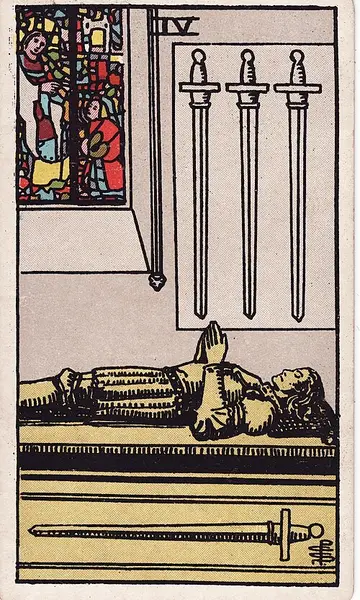
- 1. Past (left): Four of Swords. You recently came out of a period of necessary rest and recovery after strain. While quiet retreat was needed back then, remaining in rest mode for too long can slide into inertia.
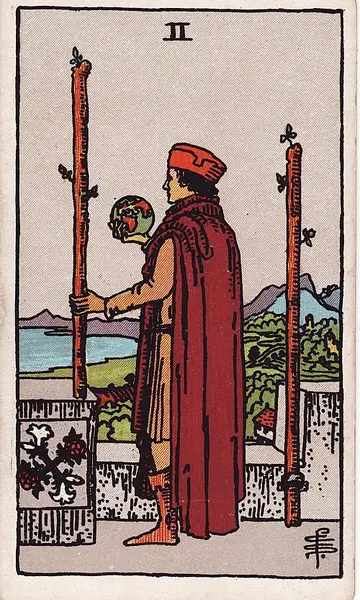
- 2. Future (right): Two of Wands. Standing between present security and wider horizons; planning and choosing a direction. The road ahead calls for deliberate planning and deciding where to expand next.
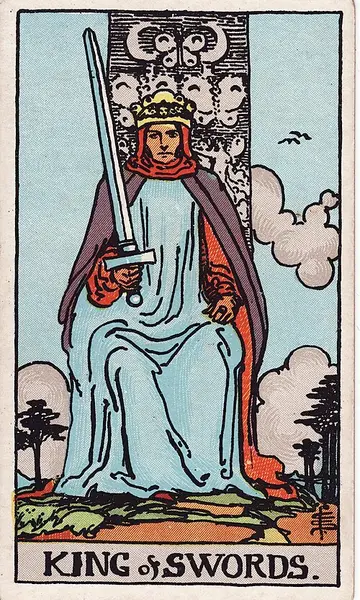
- 3. Above / conscious mind (top): King of Swords. Consciously, you are approaching your work with cool intellect, strict rules, and analytical judgment. You want complete intellectual authority and control.
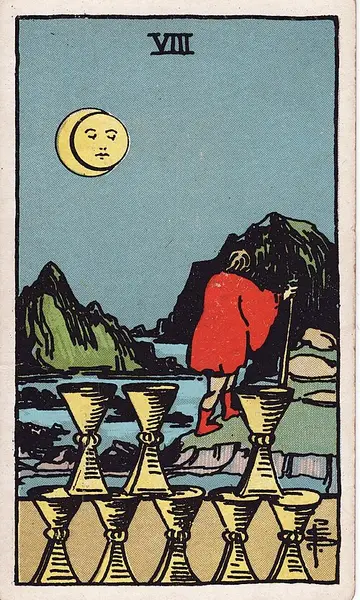
- 4. Below / subconscious (bottom): Eight of Cups. Beneath the surface, there is a quiet emotional pull to walk away from what no longer satisfies in search of deeper meaning. Your heart has already moved on from an old style or routine.
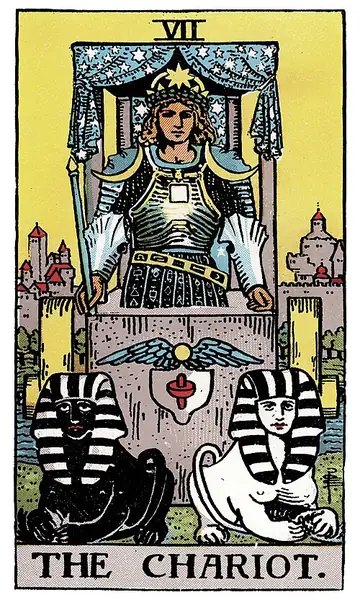
- 5. Essence of the situation (center): The Chariot (reversed). Lost direction, a lack of control, or opposing forces pulling you in conflicting ways.
Reading the story: The central issue is a temporary loss of direction (The Chariot reversed). Looking at the vertical axis, the reason becomes clear: your head wants rigid, rational control (King of Swords), while your emotional core is silently mourning an empty pursuit and longing for deeper meaning (Eight of Cups). Air and Water here run on separate tracks, leaving your creative drive stalled in the middle. Looking horizontally, you rested well in the past (Four of Swords), and your next step forward is to take that quiet insight, honor what your heart wants to leave behind, and begin actively planning your next horizon (Two of Wands).
Try it yourself
When you feel stuck or need to reconcile your head and your heart, bring a focused question to the bot: