The Knight of Cups represents an invitation, a creative inspiration, or an emotional offer arriving in your life. In tarot, this card embodies the quiet romantic and imaginative idealist—someone who approaches life not with force or haste, but by following the heart with sensitivity and charm.
What is the upright meaning of the Knight of Cups?
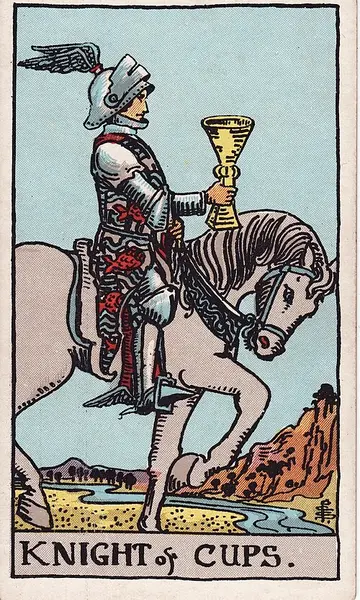
When the Knight of Cups appears upright, it signals the arrival of proposals, pleasant invitations, and opportunities to connect on an emotional level. In the Rider–Waite–Smith tradition, published in 1909, Arthur Edward Waite described this figure as an approaching messenger bringing advances, propositions, and creative ideas.
Unlike traditional knights who ride into battle, this knight is graceful, poetic, and focused on inner values. The upright card encourages you to honor your feelings and trust your imagination. It marks a moment where following what genuinely moves you brings warmth, artistic inspiration, and deeper connection.
What does the Knight of Cups mean reversed?
Reversed, the Knight of Cups warns that charm may turn hollow. Emotional energy can slip into moodiness, unrealistic romanticism, or promises that never materialize. Waite associated the reversal with artifice, subtlety, duplicity, and fraud, pointing to instances where appealing appearances mask an unwillingness to deal with reality.
When this card is reversed, it invites you to look past sweet words or attractive proposals and evaluate situations by concrete actions. It reminds you to stay emotionally honest with yourself and to ensure that deals or connections are grounded in mutual sincerity rather than wishful thinking.
How does the Knight of Cups appear in love and relationships?
In readings centered on love, the Knight of Cups points to a proposal, a romantic gesture, or a sincere expression of affection. It represents someone stepping forward to share their feelings, opening the door to tenderness and mutual appreciation.
This card invites you to embrace vulnerability and approach your relationships with a warm, open posture. It values emotional authenticity over games, showing that thoughtful, gentle overtures can dissolve tension and bring two people closer.
What does the card mean for work and finances?
In professional readings, the Knight of Cups indicates that an offer arrives or that you are drawn toward a creative pursuit. Because the suit of Cups governs emotions and imagination, this card favors work connected to design, counseling, writing, or any field where empathy and creative vision take center stage.
Financially, the card suggests that an opportunity aligns well with your creative talents. When reversed, however, it serves as a helpful caution: be wary of deals that seem exceptionally attractive on the surface, as they might be impractical or misleading. Follow your heart in your projects, but take the time to verify that agreements are substantial.
Is the Knight of Cups a yes or no card?
When you are seeking a simple directional reflection, the Knight of Cups reads as a yes. Its receptive, constructive nature supports creative initiatives, peaceful conversations, and heartfelt decisions, provided you remain aware of the practical steps needed afterward.
What is pictured on the card and why?
In Pamela Colman Smith’s 1909 illustration for the Rider–Waite–Smith deck, a knight wearing a winged helmet rides calmly on a white horse toward a gentle stream, holding a golden cup out before him.
Every element of the imagery reflects his peaceful inner state:
- The white horse walks slowly rather than charging, depicting a gentle, unhurried approach.
- The winged helmet and winged heels symbolize heightened imagination, inspiration, and elevated thoughts.
- The extended cup represents an offer of the heart—a message, a feeling, or a gift held out openly.
- The tranquil stream reflects the flowing emotional current that guides his journey.
What does this court card represent as a person or an attitude?
In tarot convention, Knights signify movement, action, and the dedicated pursuit of a goal. However, court cards can be understood in two ways: as an actual person characterized by their temperament, or as an attitude and role within yourself.
As a person, the Knight of Cups represents someone sensitive, artistic, charming, and idealistic—a natural listener and dreamer who dislikes conflict. As an internal attitude, this card shows you how to pursue your goals with empathy, grace, and imaginative vision rather than brute determination.
What are the astrological and esoteric correspondences?
The Knight of Cups belongs to the suit of Cups, which corresponds to the element of Water—the realm of emotions, love, and relationships.
In the esoteric system of the Hermetic Order of the Golden Dawn, this card bears the title “Prince of the Chariot of the Waters.” Its astrological attribution is recorded as “Air of Water, Scorpio.” This blend pairs the swift thought and communication of Air with the deep emotional tides and intuitive depth of Water and Scorpio.
How does the Knight of Cups combine with other suits?
Because the Knight of Cups brings the fluid, receptive energy of Water, its expression shifts depending on the elemental qualities of surrounding cards:
- With Fire (Wands), the knight’s emotional dreams find warmth and vitality, turning quiet visions into active creative output, though too much heat can make idealism volatile.
- With Air (Swords), intellectual clarity tests the knight’s romantic visions, helping separate genuine intuition from wishful thinking.
- With Earth (Pentacles), emotional propositions and creative ideas receive practical grounding, allowing heartfelt concepts to develop into tangible results.
What are common mistakes when reading the Knight of Cups?
A frequent mistake is expecting the Knight of Cups to act like a conventional knight in armor. This figure is not a person of aggressive, rapid conquest; he is a dreamer, proceeding slowly and gracefully through feeling.
Another common misreading is mistaking his offer for an immediate, finished commitment. The Knight of Cups brings an invitation or an overture. It opens a meaningful conversation, but long-term stability requires ongoing care and grounded effort.
Try it yourself
- What creative or emotional offer am I ready to extend to someone in my life?
- Where am I being invited to follow my heart rather than relying solely on pure logic?
- Is an attractive opportunity in front of me genuinely realistic, or am I carried away by ideals?
- How can I bring more gentleness and imagination into my current pursuit?