In tarot, The Devil represents bondage to temptation, fear, and material attachment—a mirror held up to show where you feel trapped, obsessive, or bound by habits, even though the chains holding you are surprisingly loose. Because it belongs to the Major Arcana, this card does not reflect small daily friction; instead, it marks big life themes and turning points, inviting an honest conversation with yourself about where you give away your power and how you can reclaim it.
What does The Devil mean upright?
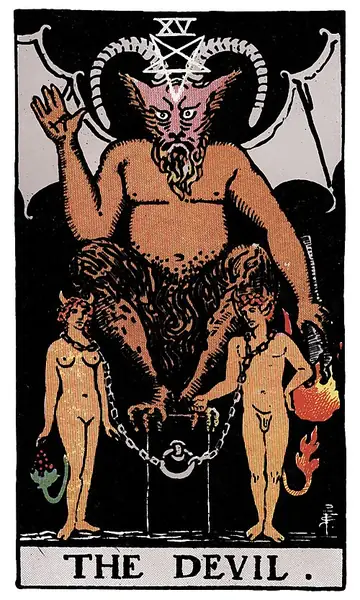
When The Devil appears upright, it points to bondage to desire, fear, or material comfort. It highlights patterns of addiction, obsession, unhealthy ties, and the deceptive ease of staying inside a trap simply because it is familiar. You might find yourself caught in repetitive routines, clinging to security, or letting temporary cravings dictate your choices.
In the Rider–Waite–Smith tradition, published in 1909, Arthur Edward Waite associated this card with vehemence, extraordinary efforts, and raw material drive. The card carries potent physical and sexual energy, but it warns against mistaking physical attachment for genuine fulfilment. The central advice of the upright Devil is simple and clarifying: name what holds you, and recognise that the chain around your neck is far looser than it looks.
What does The Devil mean reversed?
Reversed, The Devil shows the chains beginning to loosen. This is the stage of breaking free, reclaiming personal power, and recognising an addiction or unhealthy pattern for what it truly is. Facing your shadow allows you to step out of denial and back into autonomy.
Waite noted that this turning point can sometimes bring feelings of weakness, pettiness, and temporary blindness. Shaking off a deeply ingrained habit leaves you vulnerable before you feel strong, and confronting old behaviors can feel disorienting. If the underlying habit is ignored or denied, the grip can easily tighten again. The reversed card calls for steady, conscious effort to walk away from what binds you.
How does The Devil apply to love and relationships?
In relationship readings, The Devil speaks of obsessive passion or unhealthy attachment. It frequently appears when genuine intimacy is replaced by codependency, jealousy, possessiveness, or emotional control.
While the physical chemistry may be intense, the card asks whether this connection supports your independence or feeds an emotional craving. It encourages you to examine whether you stay in a partnership out of mutual respect and care, or out of fear of being alone, financial dependence, or habit.
What does The Devil mean for work and finances?
In the workplace, The Devil warns of exploitation, overwork, and the classic trap of golden handcuffs. You may find yourself staying in a high-stress or unfulfilling role simply because the salary or title feels too comfortable to give up, trading personal well-being for material status.
Financially, the upright card indicates debt, restrictive contracts, or money tied to a bad bargain. When reversed, The Devil signals an opportunity to break free from a costly obligation, negotiate your way out of restrictive agreements, and regain financial self-determination.
Does The Devil mean yes or no?
In a straightforward question, The Devil reads as a no. It cautions that moving forward under current conditions may tie you to restrictive compromises, hidden costs, or unhealthy dependencies.
What is pictured on the card and why?
Pamela Colman Smith’s illustration for the 1909 deck features a horned, bat-winged satyr-like figure crouching atop a black half-cube. An inverted pentagram sits on his brow, and his lowered torch burns with destructive rather than illuminating fire, representing the misuse of raw energy.
At the base of the block, a naked man and woman stand chained by iron collars. Crucially, the loops around their necks are visibly wide and loose; they could slip them off with their own hands and walk away at any moment, demonstrating that their bondage is self-chosen. Small horns and tails have sprouted on both human figures, illustrating how dwelling in unexamined fear and raw desire gradually causes people to adopt the nature of the beast.
What are the esoteric correspondences of The Devil?
The Devil card is rooted in the esoteric framework of the Hermetic Order of the Golden Dawn:
- Element: Earth. In modern tarot practice, this element is derived directly from its astrological sign to assess elemental dignities between cards in a spread.
- Astrology: Capricorn, the Golden Dawn attribution, reflecting ambition, worldly structures, and physical reality.
- Golden Dawn title: Lord of the Gates of Matter; Child of the Forces of Time.
- Hebrew letter: Ayin (meaning eye), signifying vision, perception, and looking directly at what binds you.
- Path: Path 26, connecting Tiphareth and Hod on the Tree of Life.
Which cards strengthen or change the meaning of The Devil?
When drawn alongside other cards, The Devil interacts in specific ways:
- The Devil and The Tower: The restrictive bonds break suddenly, pointing to liberation through shock or an abrupt collapse of an old structure.
- The Lovers and The Devil: Romantic passion becomes tangled in obsession, temptation, or an unhealthy dynamic between genuine choice and compulsive craving.
- Temperance and The Devil: The tension between moderation and excess, highlighting a direct struggle with an addiction or swinging between extremes.
What are the most common mistakes when interpreting The Devil?
A common misunderstanding is treating The Devil as a demonic omen or a sign of literal evil. In modern tarot, it is never a curse; it simply reflects human attachment, materialism, and unexamined corners of your shadow.
Another mistake is assuming that the card represents a hopeless situation. The visual details make it clear that the bondage is never absolute: the chains are loose and can be lifted off whenever you are ready to make that choice.
Try it yourself
If you want to reflect on these themes, here are three questions you can ask the bot right now: