At its core, The Hermit represents a deliberate step back from external noise to find your own inner clarity. As Major Arcanum number 9, it signifies a major turning point where understanding comes not from gathering more opinions or rushing forward, but from quiet introspection, study, and trusting your own lived experience.
What does The Hermit mean upright?
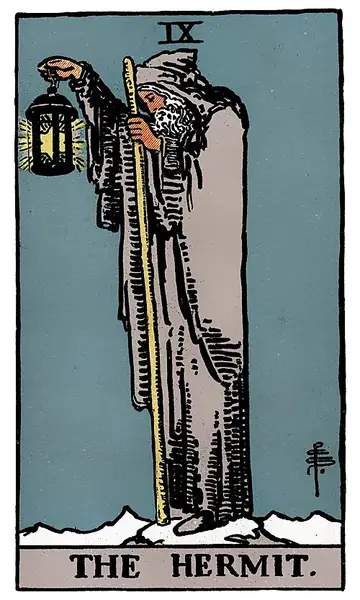
Upright, The Hermit reflects a conscious, solitary search for wisdom and truth. It invites you to step back from the busyness of the world to study, reflect, and seek depth over chatter. This may look like consulting your own inner light, taking your own counsel, or seeking quiet guidance from a wise mentor.
In the Rider–Waite–Smith tradition, published in 1909, Arthur Edward Waite associated this card with prudence and circumspection. Waite also assigned it a darker side—mentioning treason, dissimulation, roguery, and corruption—nuances that modern readers largely set aside in favour of constructive solitude. In an everyday reading, the card advises you to slow down, look beneath surface impressions, and find guidance by reconnecting with what you already know to be true.
What does The Hermit mean reversed?
When reversed, healthy solitude can easily turn sour, or reflection may be refused altogether. The card can point to loneliness, feeling trapped in isolation, or harbouring undue suspicion toward others. In other cases, it suggests running away from introspection by burying yourself in distractions and outer noise.
Waite gave the reversed card meanings of concealment, disguise, fear, and unreasoned caution. Yet a reversed Hermit is not always a warning; it can also indicate the natural end of a quiet retreat, signaling that it is time to return to the world and share what you learned in private.
How does The Hermit appear in love and relationships?
In relationships, The Hermit indicates a genuine need for personal space or being single by choice. It encourages honest self-examination rather than staying busy with romance just to avoid your own company.
For those currently in a partnership, this card does not signify rejection. Instead, it suggests stepping back to understand your individual needs, giving each other breathing room, and communicating from a place of grounded self-awareness.
How does The Hermit guide work and money?
In work matters, The Hermit advises thorough research and careful reflection before taking action. It favours deliberate study, building deep expertise, and keeping your focus on quality rather than rushing to make an outward impression.
When it comes to money, the guidance is to research thoroughly before investing and to keep your own counsel rather than following financial trends. Reversed, it warns against excessive caution that leads to paralysis, as well as making major financial decisions in complete isolation without consulting reliable facts.
Does The Hermit read as a yes or a no?
In straightforward queries, The Hermit reads as a maybe. It suggests that the current question cannot be resolved with a quick decision, and that you need more time, patience, and independent reflection before moving forward.
What is pictured on the card and why?
In the Rider–Waite–Smith deck (1909), a cloaked figure stands alone upon a snowy mountain peak, holding a staff in one hand and raising a lantern in the other. Inside the lantern glows a six-pointed star, representing the inner light of truth.
Each detail in this scene highlights the path of the deliberate seeker. The high peak represents hard-won wisdom gained by rising above everyday distractions. The lantern is not only for the seeker’s own steps; it is held high as quiet guidance offered to anyone who chooses to follow the same climb. The sturdy staff provides grounded support, while the grey cloak symbolises discretion, modesty, and the protection of inner focus.
What are the esoteric correspondences of The Hermit?
The card’s traditional correspondences stem from the Hermetic Order of the Golden Dawn:
- Golden Dawn Title: The Prophet of the Eternal; the Magus of the Voice of Power
- Astrological Attribution: Virgo
- Element: Earth (in modern tarot practice derived from the Golden Dawn, a zodiacal card is paired with that sign’s element, which is used when reading elemental dignities between cards)
- Hebrew Letter: Yod (meaning “hand”)
- Kabbalistic Path: Path 20, running between Chesed and Tiphareth
Which cards strengthen or change The Hermit?
The Hermit’s contemplative nature interacts clearly with other cards of inner awareness:
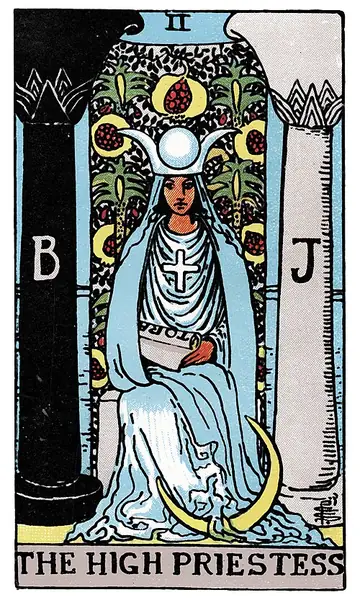
- The High Priestess + The Hermit: This pair points to a deep, quiet inner search and profound wisdom discovered through stillness and intuitive reflection.
Through its Earth correspondence inherited from Virgo, The Hermit naturally grounds practical and emotional themes when drawn alongside Pentacles and Cups, bringing patience and measured consideration to tangible situations.
What are common mistakes when reading The Hermit?
A frequent misreading is interpreting The Hermit as a sign of abandonment, unwanted loneliness, or rejection by others. In tarot, The Hermit represents chosen solitude—a conscious decision to step away temporarily to find clarity, not a social exile.
Another common mistake is taking the illustration too literally. The card does not automatically point to an elderly man or an external stranger. More often, it describes a personal phase of inward searching, maturity, and self-reliance.