In tarot, The Hierophant represents tradition, institutions, teaching, shared beliefs, and established conformity. As card number 5 of the Major Arcana, it highlights a big life theme and an important turning point, reaching beyond the everyday details of life. It invites you into a calm conversation with yourself about how you relate to established structures, whether you seek trusted guidance, and whether you are living by your own true convictions or following convention without reflection.
What does The Hierophant mean upright?
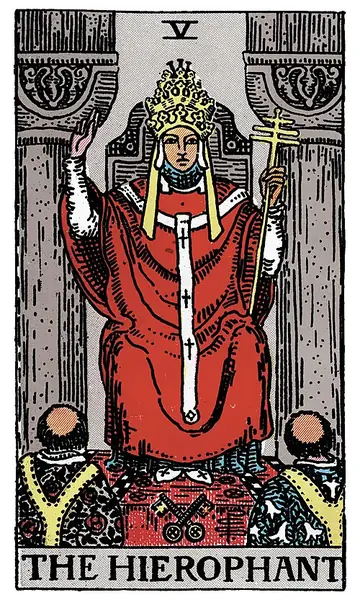
Upright, The Hierophant acts as the voice of tradition, teaching, and established institutions. It reflects shared rules, collective ethics, and the distilled wisdom of an established path. In the Rider–Waite–Smith tradition, published in 1909, Arthur Edward Waite associated this card with marriage, alliance, mercy, goodness, and the teacher or adviser one turns to for sound counsel.
When this card appears, it generally favours formal commitment, learning from a mentor, and working thoughtfully within an existing system rather than rebelling against it. It suggests that there is valuable insight to be gained from established ways of doing things. Its core guidance is clear: learn from those who walked this road, then decide what you truly believe.
What does The Hierophant reversed mean?
Reversed, The Hierophant indicates that convention is being questioned. It points to rebellion against dogma, choosing an unconventional path, or confronting rules that have become rigid, hollow, and restrictive. Waite noted qualities of society, concord, over-kindness, and even weakness in this posture.
In a personal reflection, the reversed card can indicate that you have encountered poor advice from an authority figure or outgrown the doctrines of a group. Just as often, it signals a constructive step toward personal autonomy: shaking off external expectations to find the freedom of your own belief system and self-directed path.
How does The Hierophant apply to love and relationships?
In questions of the heart, The Hierophant speaks to commitment, marriage, and traditional values. It often marks a stage where partners wish to formalize their relationship, honour cultural or family customs, and anchor their bond in shared moral standards.
Upright, it highlights the strength found in mutual respect, clear promises, and institutional or community recognition. Reversed, it can indicate friction over differing value systems, pressure to conform to family expectations, or a deliberate choice between partners to bypass traditional relationship rules in favour of something personal and non-standard.
How does The Hierophant apply to work and money?
At work, The Hierophant centres on formal rules, structured education, and working with a mentor. It suggests success through established processes, professional accreditation, and learning how to navigate an organizational hierarchy with skill and patience.
Regarding money, the card points to conventional, proven channels such as banks, established savings systems, and regulated institutions. It favours orthodox financial strategies over risky gambles. Reversed, it warns against uncritical adherence to bad official advice or bureaucratic red tape, and it may indicate that an unconventional career or financial route suits you better.
Does The Hierophant mean yes or no?
In a straightforward yes-or-no inquiry, The Hierophant reads as a maybe. Rather than providing a direct push in either direction, it invites you to slow down and consider whether your proposed choice adheres to ethical standards, formal processes, and sound counsel.
What is pictured on the card and why?
In the Rider–Waite–Smith deck, a pontiff wearing a triple crown sits solemnly between two stone pillars, raising his right hand in blessing over two kneeling ministers, with crossed keys resting at his feet. The scene visualizes tradition handing down its teaching through established channels.
The crossed keys at his feet represent access to both outer knowledge (practical doctrine and formal rules) and inner knowledge (spiritual understanding and personal insight). The two ministers kneeling before him stand for students receiving doctrine, illustrating how accumulated wisdom travels from teacher to student across generations.
What are the card’s historical correspondences?
The Hierophant holds precise attributions stemming from the Hermetic Order of the Golden Dawn:
- Golden Dawn Title: The Magus of the Eternal
- Astrology: Taurus (this is the original Golden Dawn attribution)
- Element: Earth (plainly speaking, this element is a modern convention derived from Taurus being an earth sign, used to assess elemental dignities between cards)
- Hebrew Letter: Vav (meaning “nail”)
- Tree of Life Path: Path 16, connecting Chokmah to Chesed
Which cards strengthen or change The Hierophant?
When The Hierophant pairs with The Lovers, the card’s theme of structured alliance becomes pronounced, pointing directly to formal commitment, engagement, or marriage. While The Lovers highlights emotional connection and personal moral choice, The Hierophant grounds that union in public vows, community support, and lasting commitment.
What are common mistakes when reading The Hierophant?
A frequent misreading is assuming that The Hierophant only concerns religion or church dogma. In modern readings, it relates just as easily to universities, corporate ladders, legal systems, or any established school of thought.
Another common mistake is treating the reversed card as automatically bad. A reversal does not imply failure or chaos; it often points to healthy independence, freedom from outworn rules, and the integrity required to think for yourself.