In tarot, the Page of Swords represents a curious, vigilant mind actively seeking truth, clarity, and fresh ideas. It signals a period of mental alertness, study, and fact-finding, encouraging you to observe your circumstances carefully and ask direct, honest questions.
What is the upright meaning of the Page of Swords?
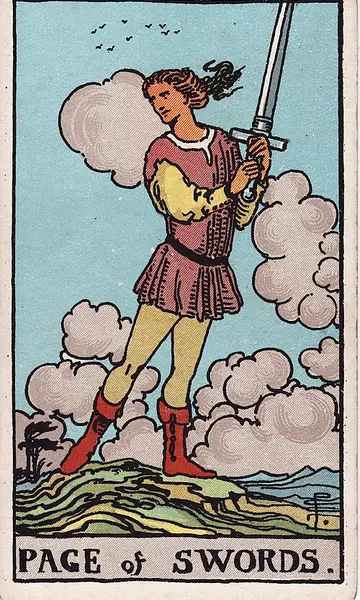
When upright, the Page of Swords reflects an energetic, watchful approach to your thoughts and communication. This card embodies an alert intellect, a thirst for learning, and the arrival of new perspectives or messages. It encourages you to examine situations with clarity rather than taking things at face value.
In the Rider–Waite–Smith tradition, published in 1909, Arthur Edward Waite associated this card with vigilance, examination, overseeing, authority, secret service, and spying. In everyday reflection, it functions as an invitation to approach life like a dedicated researcher. The card strongly favours study, investigation, and testing ideas through honest inquiry. Its central guidance is simple: ask questions, check facts, and speak plainly.
What does the Page of Swords mean reversed?
Reversed, the vigilant nature of the card tilts toward haste, gossip, or a scattered mind. Waite noted that the reversed card brings out the worse side of its upright qualities, pointing toward an unready state, the unforeseen, and even hints of sickness.
In this position, mental alertness can easily degrade into careless words, prying into affairs that do not concern you, or cynicism. You might find yourself caught unprepared by sudden developments or reacting defensively. The card serves as a timely reminder to think before you speak, verify rumors before reacting to them, and avoid jumping to hasty conclusions.
How does the Page of Swords appear in love?
In relationship readings, the Page of Swords indicates a chatty, questioning start. The dynamic centers on mental connection, curiosity, and lively conversation where both people are still figuring out how they fit together.
Because Pages embody beginner energy, this card focuses on intellectual rapport rather than settled commitment. It encourages honest questions, active listening, and frank dialogue. Approaching the connection with openness and curiosity helps clear away confusion early on.
What does the Page of Swords mean for work and money?
In professional situations, the Page of Swords highlights study, news, and careful fact-finding. It is an encouraging sign if you are learning a new skill, gathering data for a project, or reviewing details before presenting a proposal.
When looking at money, this card advises you to research and fact-check before deciding. Take the time to read contracts, inspect the numbers, and understand every condition thoroughly. If the card appears reversed, exercise extra caution around misinformation or hasty financial choices made without sufficient background research.
Is the Page of Swords a yes or no?
In a yes-or-no context, the Page of Swords reads as a maybe. Because the suit of Swords governs intellect and inquiry, this card suggests that the situation is still unfolding and that you do not yet have all the necessary information. Rather than rushing into a choice, it suggests pausing to gather more facts.
What is pictured on the card and why?
Illustrated by Pamela Colman Smith in the 1909 Rider–Waite–Smith deck, the card shows a young person striding across rough, uneven ground. They hold an upright sword firmly in both hands while glancing sideways over their shoulder, looking alert, curious, and watchful. In the background, birds fly through the sky as restless clouds gather.
Every element of this scene mirrors the qualities of active thought. The gusty wind and turbulent clouds represent restless ideas in motion. The raised sword symbolizes mental readiness to defend an idea, cut through deception, and stand up for the truth.
What does this court card say as a person and as an attitude?
Within tarot court conventions, Pages traditionally represent messages, learning, and the beginner’s stage of development. A court card can represent either an actual person in your daily life or an attitude and role within yourself.
As an attitude, the Page of Swords asks you to adopt a beginner’s mind: stay observant, remain open to new facts, and do not pretend to know answers you haven’t verified. When representing a person, it describes someone with an inquisitive, analytical temperament who communicates directly, values truth, and keeps a watchful eye on what is happening around them.
What are the correspondences of the Page of Swords?
The suit of Swords belongs to the element of Air, which rules thoughts, communication, conflict, and decisions. In the esoteric system of the Hermetic Order of the Golden Dawn, this card bears the title “Princess of the Rushing Winds; Lotus of the Palace of Air.”
Its Golden Dawn elemental attribution is Earth of Air. In this system, Pages represent the earthy, tangible part of their suit’s overarching element. Earth of Air describes the intellect grounding itself into reality—taking swift, abstract concepts and applying them to concrete facts, research, and observable evidence.
Which cards strengthen or change the Page of Swords?
Because the Page of Swords is rooted in the element of Air, its character shifts depending on the elements surrounding it in a spread:
- Air with Fire: Fire cards lend passion and momentum to the Page’s sharp curiosity, transforming analytical research into confident, decisive initiative.
- Air with Water: Water cards bring emotional awareness to the cool logic of Swords, reminding you to weigh personal feelings and empathy alongside objective facts.
- Air with Earth: Earth cards provide stability to the Page’s restless thoughts, helping ground theoretical inquiries into practical, step-by-step results.
- Air with Air: Other Swords or Air cards intensify the mental environment, accelerating communication and debate while warning against overthinking and mental chatter.
What are common mistakes when reading this card?
A frequent misreading is assuming the Page of Swords represents an enemy or a malicious spy. The card simply reflects curiosity and vigilance; being observant does not automatically equal hostility. Another mistake is treating this card as a symbol of active conflict. The Page of Swords does not depict open battle, but rather a mind on the alert, evaluating circumstances before any action takes place.