In tarot, Death represents an ending and profound transformation. It marks the moment when one chapter closes so another can open, clearing away what has completed its cycle to make room for something new.
What does Death mean upright?
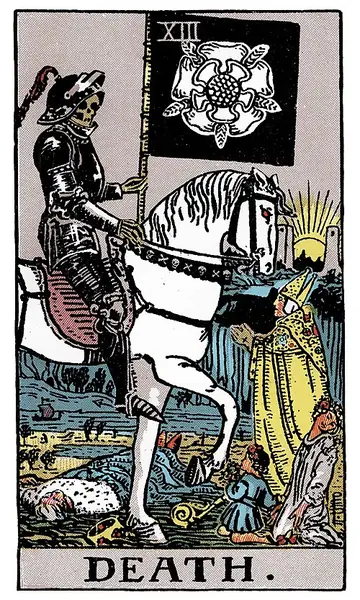
When Death appears upright, it asks you to recognize that a phase of life, a mindset, or a situation has run its course. Major Arcana cards speak to big life themes and meaningful turning points that go beyond everyday concerns, and Death represents one of the most fundamental shifts: the cycle of completion and rebirth.
Its core themes are ending, transformation, release, change, rebirth, and closure. In the historic Rider–Waite–Smith tradition, published in 1909 by Arthur Edward Waite and artist Pamela Colman Smith, earlier interpretations included heavier concepts like mortality, destruction, corruption, or the loss of a benefactor and failed marriage plans. Modern tarot practice views the card through a grounded, reflective lens: once an old form is let go, genuine change and renewal can take root. The advice of the card is simple and clear: let what has ended be over, so the new can begin.
What does Death mean reversed?
Reversed, Death points to resistance to change, leading to stagnation or a slow, drawn-out decay. It often reflects an inner reluctance to accept that a chapter has finished, keeping you tethered to patterns, jobs, or dynamics that no longer hold life.
Waite described the reversed card with terms such as inertia, sleep, lethargy, and petrification. Clinging to what is already over does not stop the transition from happening; it only prolongs the discomfort. The card reversed encourages you to notice where you are holding on out of fear of the unknown, and to consider what might happen if you finally allow the cycle to finish.
How does Death appear in love readings?
In questions of the heart, Death signifies the end of a phase and deep renewal. This card does not automatically mean a relationship is ending. While it can mark the conscious conclusion of a partnership that has run its course, it just as often represents the death of an old pattern within an ongoing connection.
An unspoken grievance, an unhealthy dynamic, or an outdated stage of romance may need to be put to rest so that a more mature bond can develop. For those who are single, Death suggests releasing emotional baggage or past attachments so that a fresh emotional chapter can begin.
What does Death mean for work and money?
In a career reading, Death signals that a role, project, or professional path is ending, with personal transformation following in its wake. You may be wrapping up a long-term commitment, shifting careers, or stepping away from an identity that no longer fits who you are becoming.
Regarding money, the card shows that a specific source of income or a financial chapter is drawing to a close, making space for new financial habits or opportunities. When reversed, it often warns of clinging to a dead investment or pouring energy into a project that has ceased to be viable.
Does Death mean yes or no?
When you need a straightforward answer, Death reads as a no. It indicates that the path in question is coming to a natural conclusion or needs a complete structural reset before any fresh beginning can take place.
What is pictured on the card and why?
In the Rider–Waite–Smith deck (1909), a skeleton in black armour rides a white horse beneath a black banner bearing a five-petaled white rose. Before the rider, figures from different walks of life react: a crowned king has fallen, a bishop stands in prayer, and a child steps forward offering flowers. In the background, between two towers on the horizon, the sun rises over the water.
Every visual element tells a specific part of the story. The rider is an ending no one can stop, and the fallen king illustrates that no social rank or status is spared from life’s natural conclusions. The white rose on the banner symbolizes the life and purity of spirit that survives the transition, while the rising sun between the towers marks the dawn of renewal that inevitably follows.
What are the card’s traditional correspondences?
The Hermetic Order of the Golden Dawn established the traditional correspondences that structure the card’s meaning:
- Arcana: Major Arcana (Rank 13)
- Golden Dawn astrological attribution: Scorpio
- Element: Water
- Golden Dawn title: The Child of the Great Transformers; Lord of the Gate of Death
- Hebrew letter: Nun (meaning fish)
- Tree of Life path: Path 24, connecting Tiphareth and Netzach
Regarding the element: while the Golden Dawn attributed the sign Scorpio to Death, modern tarot convention derives the card’s element directly from that sign, assigning Water to Death. This element is used to understand elemental dignities between neighboring cards in a spread.
Which cards strengthen or change Death?
When Death appears alongside other cards, its message adapts based on the combination:
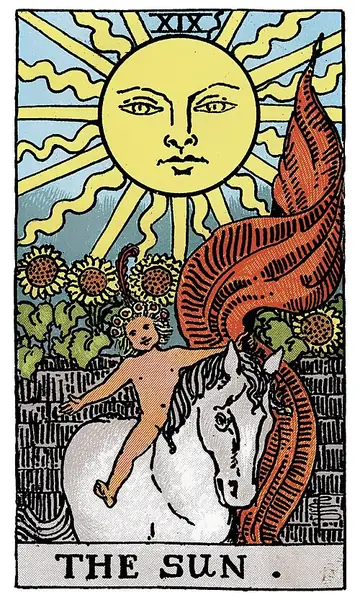
- Death + The Sun: An ending that clears the way for genuine joy and renewal, showing that whatever finishes will lead to vitality.
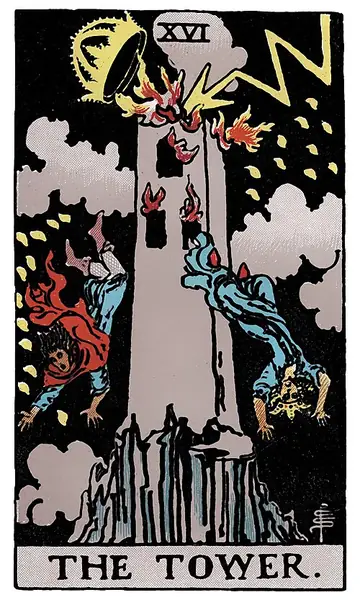
- Death + The Tower: Radical, unavoidable change and a total reset, where outworn foundations collapse completely.
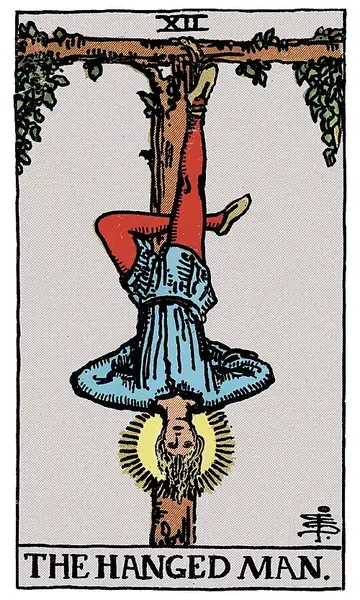
- The Hanged Man + Death: Conscious surrender and letting go make way for an ending and meaningful transformation.
What are the common mistakes when reading Death?
Because of its dramatic title and imagery, Death is frequently misinterpreted. The most common error is assuming it predicts physical death; in tarot practice, Death almost never refers to physical demise, functioning instead as a symbol for closure and internal evolution.
Another common mistake is treating Death as a sudden shock. That sudden disruption belongs to The Tower. The change shown by Death is natural and unavoidable, but it often arrives as a gradual, organic culmination of things that have simply reached their end.