The Six of Cups is a card of nostalgia, innocence, and quiet emotional kindness. It reflects gifts from the past, warm memories, and reunions that reconnect you with simple, heartfelt affection. In tarot, this card is not a prediction of fate, but an invitation to a calm conversation with yourself about your roots, what you cherish from your history, and how you can bring sincere goodwill into your current life.
What does the Six of Cups mean upright?
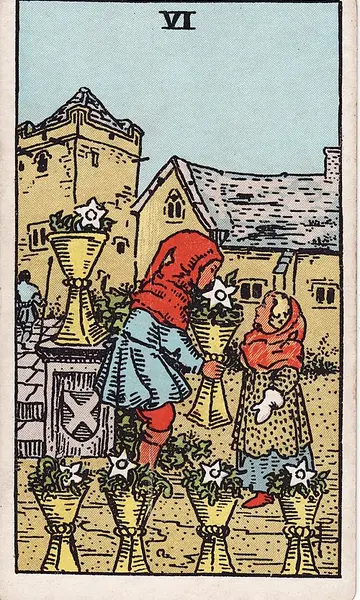
Upright, the Six of Cups highlights innocence, fond memories, and the comfort of the familiar. It speaks to sincere affection, gifts, and reunions with people who knew you before life grew complicated. When this card appears, it often points to happiness drawn from things that have passed, offering emotional replenishment in the present.
In the Rider–Waite–Smith tradition (published in 1909), Arthur Edward Waite described it as looking back upon vanished joys, while another traditional layer points to receiving new knowledge through familiar surroundings. The central advice of this card is simple: honour the past, but live in the present. It encourages you to draw strength from your background without losing your footing in today.
What does the Six of Cups mean reversed?
Reversed, the Six of Cups shows what happens when memory becomes an obstacle. You might find yourself stuck in earlier days, looking at the past through an unrealistic filter, or refusing to take on the responsibilities of growing up. Clinging to an idealised yesterday can prevent you from seeing the opportunities right in front of you.
At the same time, Waite associated the reversal with renewal, the future, and what will soon come to pass. In this positive light, the reversed card marks the moment you are ready to let go of old patterns, release what has run its course, and turn your attention fully forward.
What does the Six of Cups mean in love?
In love, the Six of Cups points to an old flame resurfacing or the warmth of a sweet, familiar bond. It reflects emotional safety, trust, and the tender care people share when they feel completely at ease with each other.
If you are reflecting on a current partnership, it suggests gentle affection and mutual support rooted in shared history. If you are questioning your dating life, it invites you to look at whether you are seeking genuine emotional simplicity or measuring everyone against a romanticised memory.
What does the Six of Cups mean at work and with money?
In professional situations, the Six of Cups highlights familiar contacts and former colleagues. It is an excellent card for returning to projects you once enjoyed, reconnecting with a trusted mentor, or collaborating with people who share your foundational values.
Financially, the card suggests practical help from family, support from longtime acquaintances, or the return of an old debt or gift. Reversed, it points to money tied up in past commitments, unresolved family financial arrangements, or clinging to outdated investments that no longer serve you.
Does the Six of Cups mean yes or no?
In a simple question, the Six of Cups reads as a yes. It brings an open, harmonious, and supportive tone to your inquiry, indicating goodwill and positive reciprocity.
What is pictured on the card and why?
In the Rider–Waite–Smith deck illustrated by Pamela Colman Smith, the scene takes place in an old village courtyard. An older child leans forward to offer a golden cup filled with white flowers to a smaller child, while a guard or sentry walks away in the distance.
Every element carries meaning. The white flowers in the cup represent purity of intent, innocence, and simple kindness. The ancient stone buildings and the departing sentry evoke the secure sanctuary of childhood—a safe space whose protective boundaries are gradually left behind as you mature.
What do its number and suit mean?
The Six of Cups belongs to the suit of Cups, which represents the element of Water. Cups govern the realm of emotions, love, and relationships. They explore how we feel, how we connect with others, and how we process our inner experiences.
Its number is six. In the Minor Arcana, the Sixes signify harmony, exchange, and moving to something better after the friction of the Fives. Within the emotional realm of Cups, this balance shows up as mutual generosity, shared memories, and emotional healing.
What are the astrological and esoteric correspondences?
In the Golden Dawn system, the Six of Cups holds precise traditional attributions:
- Suit Element: Water
- Astrology: Sun in Scorpio (the Golden Dawn decan assignment)
- Golden Dawn Title: Lord of Pleasure
These correspondences blend the penetrating emotional depth and memory of Scorpio with the warm, restorative light of the Sun. This combination creates the deep, comforting pleasure that comes from remembering who you are at your core.
How does the Six of Cups interact with other elements?
Because the Six of Cups is anchored in Water, its expression shifts depending on the surrounding elemental energies in a reading:
- Water with Water: Deepens sentimentality, emotional intuition, and nostalgia, creating rich shared empathy, though it can risk drowning in the past.
- Water with Earth: Grounds fond memories into tangible support, family stability, and long-term security.
- Water with Fire: Combines nostalgia with creative energy, turning childhood dreams and old passions into active inspiration for new projects.
- Water with Air: Brings clarity and objective reflection to emotions, helping you understand your personal history with maturity and perspective.
What are common misreadings of the Six of Cups?
A frequent misunderstanding is assuming the Six of Cups always announces an ex returning to your life. While reconnection is one possible expression, the card is fundamentally about memory, innocence, and emotional roots in general, not an automatic romantic reunion.
Another common mistake is confusing innocence with immaturity. The card does not point to being childish; rather, it highlights gentleness, sincere goodwill, and the wisdom of keeping an open, uncluttered heart.
Try it yourself
- What gentle memory from my past can offer me comfort or guidance right now?
- How can I bring more uncomplicated kindness into my closest relationships today?
- Am I holding onto an idealised version of the past, or am I honouring my roots while moving forward?
- What former interest or familiar connection is ready to be revisited with fresh eyes?